What is a Stage 2 Remap?
31 August 2026
A stage 2 remap is an ECU software tune that only works once your car has the hardware to back it up, usually an upgraded intercooler, exhaust and induction system. It goes a step further than a stage 1 remap, which is software only, because pushing more power and boost through the engine safely needs those physical changes in place first. In this guide, BRS Remapping explains what a stage 2 remap involves, what it costs, and whether it's the right next step for your car.
What Does a Stage 2 Remap Involve?
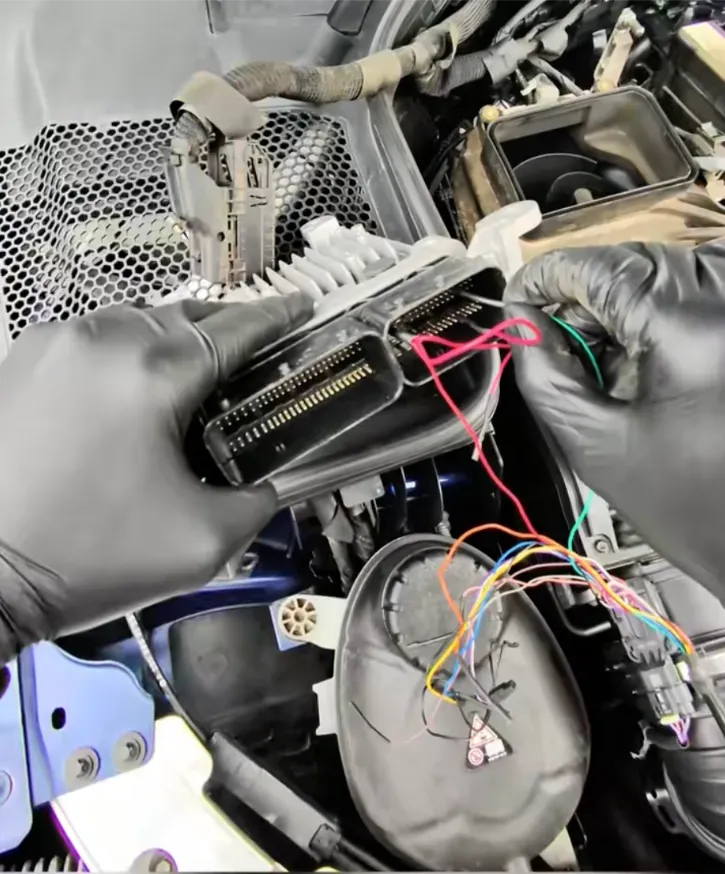
A stage 2 remap combines a fresh ECU software calibration with the hardware upgrades needed to support it. Where what a car remap involves at stage 1 stays entirely within the limits of your standard components, stage 2 asks more of the engine, so the parts around it need to keep up. Fuel, boost and ignition timing all get recalibrated again, but this time against a different set of physical limits.
What typically changes on the hardware side:
- The intercooler, upgraded for better heat management under sustained boost
- The exhaust system, opened up to reduce backpressure
- The air intake, swapped for a higher flow induction kit
- On some cars, the injectors or turbo itself, if the standard parts are already close to their ceiling
The exact mix depends entirely on what your car came with from the factory. A car with a generous standard turbo might only need an intercooler and exhaust. Others need more.
What Hardware Do You Need for a Stage 2 Remap?
You need a performance intercooler, an upgraded exhaust system and a high-flow air filter or induction kit before a stage 2 remap makes sense. These three tend to form the baseline across most petrol and diesel platforms, because they address the three things that limit safe power delivery once you go past stage 1: heat, airflow and exhaust gas movement.
The usual shopping list looks like this:
- A performance intercooler, to keep intake temperatures down under repeated hard driving
- A cat-back or full exhaust system, to let the engine breathe out as easily as it now breathes in
- A high-flow air filter or induction kit, replacing the restrictive standard airbox
- Occasionally, uprated injectors or a hybrid turbo, but only where the standard versions are already a bottleneck
Diesel setups sometimes carry extra considerations. EGR and DPF systems interact with the remap in ways petrol engines don't have to deal with, so a technician needs to account for both when calibrating the tune. This is one of the reasons a stage 2 remap should never be done blind from a generic file. It has to be built around your specific hardware, not just your engine code.
How Is a Stage 2 Remap Different From a Stage 1 Remap?
Stage 2 needs supporting hardware before the ECU tune goes anywhere near the car. Stage 1, covered in our guide to what is a stage 1 remap, works within the standard hardware limits, so there's nothing to fit first. Stage 2 pushes past those limits, which is exactly why the intercooler, exhaust and induction changes come before the software.
What Performance Gains Can You Expect from a Stage 2 Remap?
Expect a bigger jump in power and torque than stage 1 delivers, plus sharper throttle response and noticeably improved drivability once the supporting hardware is in place. The actual numbers vary too much by platform to quote a fixed figure here, and any guide that gives you one without knowing your exact car and hardware is guessing.
What tends to shift on a well matched stage 2 setup:
- Peak power and torque, both increased beyond what stage 1 alone can safely deliver
- Throttle response, sharper because the intake and exhaust are no longer choking the engine at higher loads
- Mid-range pull, often the most noticeable change day to day
- Heat management, improved rather than worsened, thanks to the intercooler upgrade
Two cars with the same engine code can see different results depending on which parts were fitted and how the tune was calibrated around them. That's not a caveat to skip past. It's the whole reason a proper assessment matters more than a spec sheet.
How Much Does a Stage 2 Remap Cost in the UK?
Cost depends mostly on what your car already has fitted, since some cars arrive at stage 2 needing only the ECU work while others need the full hardware list bought and installed first. That gap in starting point is the main reason prices vary so widely across the UK market.
A car that already has an aftermarket exhaust and intercooler from a previous owner costs less to bring to stage 2 than one starting from fully standard. Labour, part quality and whether you're supplying your own components all move the number too. Rather than quote a figure that won't match your car, BRS Remapping's mobile ECU remap service is built around a personalised quote once we know your make, model and current setup. That's the only honest way to price it.
Who Is a Stage 2 Remap Worth It For?
A stage 2 remap suits drivers who already have the supporting hardware fitted, or are happy to invest in it, and who want a step up from what stage 1 offers. It also suits drivers planning to keep their car modified for a while, since the value of stage 2 shows up over months and years of ownership, not just the drive home from the workshop.
It's generally worth considering if you:
- Already run an upgraded intercooler, exhaust or induction kit
- Want more than stage 1 remap can deliver on standard parts
- Plan to keep the car in this state for the medium to long term
It's not right for every car or every driver. If you're chasing a quick refinement for a daily runabout you'll sell in a year, stage 1 usually makes more sense, and we'll tell you that honestly rather than upsell you into hardware you don't need.
Is a Stage 2 Remap Legal to Drive on UK Roads?
Yes, remapping is legal in the UK, but the modified car still has to stay within the emissions standards it was built to meet. Tampering with emissions equipment, including DPF or EGR systems on diesels, can cause an MOT failure under the guidance set out in the DVSA MOT inspection manual guidance on modified engines and emissions.
This is where a reputable remapper earns its keep. A stage 2 tune done properly accounts for emissions compliance as part of the calibration, not as an afterthought. You should also declare the modification to your insurer once it's done. Skipping that step risks a claim being refused later, which costs far more than the honesty would have.
How Does a Stage 3 Remap Go Further Than Stage 2?
Stage 3 goes further by requiring larger hardware changes again, usually an upgraded or hybrid turbo, stronger internal engine components and bigger injectors, built for cars aimed at serious performance rather than everyday driving with a bit more punch.
Where stage 2 works with supporting bolt-on parts, stage 3 gets into the engine itself:
- An upgraded or hybrid turbo, replacing the standard unit entirely
- Stronger internals, sometimes including pistons, rods or a reinforced bottom end
- Larger injectors, needed to feed the extra airflow the new turbo provides
Most road cars never need to go this far, and that's worth saying plainly. Stage 3 belongs to a smaller group of owners with track ambitions or serious modified builds, not the average driver looking for a livelier commute.
Now you know what a stage 2 remap involves, what it takes to get there and who it's worth it for, the next step is finding out what it looks like for your own car. BRS Remapping carries out
mobile stage 1 and stage 2 remaps across Manchester,
Bolton, Stockport, Cheshire and
Leigh, coming to you rather than the other way round. Request a quote or give the team a call on 0161 350 0181 to find out what your car needs and what it would cost.
Frequently Asked Questions About Stage 2 Remaps
Does a Stage 2 Remap Suit Every Car Make?
Not exactly. Most turbocharged petrol and diesel engines can be taken to stage 2, but the gains and the hardware needed vary a lot by make and model. Some platforms respond brilliantly, others hit their limits quickly. A proper assessment of your specific car tells you which category it falls into.
What Are the Risks of a Stage 2 Remap?
The main risk is a poorly matched tune, one that pushes power beyond what your specific hardware and engine internals can handle safely. Done properly, with the right supporting parts and a technician who understands your platform, the risk is low. It's the shortcuts, generic files and skipped assessments that cause problems.
Where Can You Get a Stage 2 Remap Done in Manchester?
BRS Remapping carries out stage 2 remaps across Manchester and the surrounding areas, coming to your home or workplace with mobile equipment rather than asking you to drop the car off. We assess your existing hardware first, then build the tune around what's actually fitted to your car.
Share this post on socials
Recent Blog Posts